sugar
2 Pack Water Droplet / Rainwater Sensor Module – Environmental Protection & micro:bit‑Friendly
2 Pack Water Droplet / Rainwater Sensor Module – Environmental Protection & micro:bit‑Friendly
Couldn't load pickup availability
Product Description
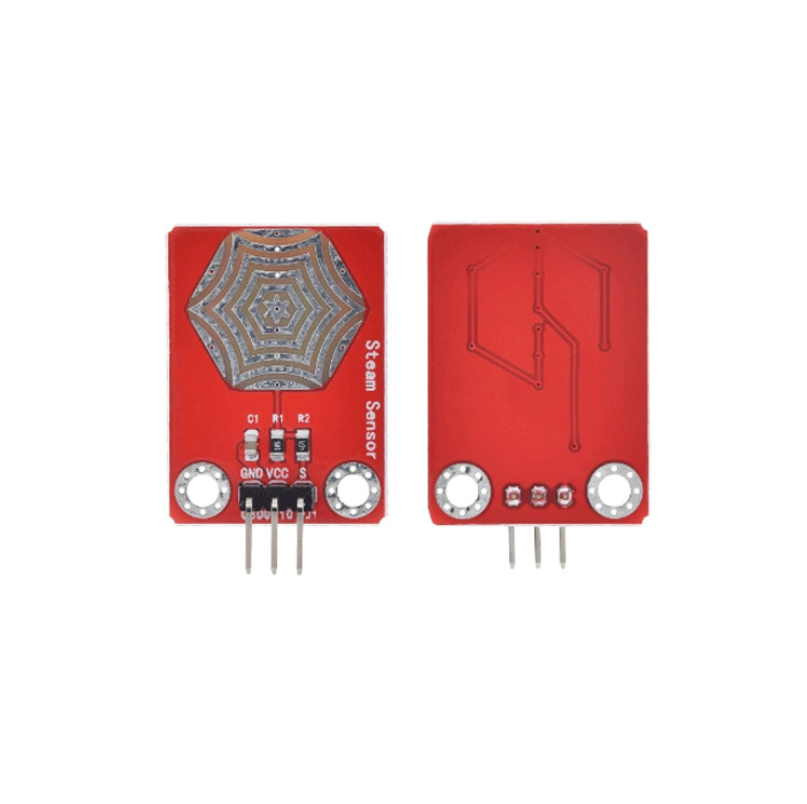
This Water Droplet / Rainwater Sensor Module consists of a plated “raindrop” detection board and a small amplifier/comparator module that together measure the presence of water adroplets, condensation, or light rain on the sensor surface. When water bridges the conductive traces, the resistance drops and the module’s output changes, providing a simple way to detect rain, leaks, or surface moisture.
Designed for education and environmental‑protection experiments, it pairs especially well with micro:bit and other beginner‑friendly boards. Students can build rain alarms, smart windows, and weather‑aware robots that react to real‑world conditions, reinforcing concepts of sustainability and water conservation.
Ideal Uses
- Rain detectors and alarms & that light LEDs or sound buzzers when it starts raining.
- Smart‑window or clothes‑drying protection, automatically warning or triggering actions when rain is detected.
- Leak or water‑ingress detection & on windowsills, enclosures, or environmental protection projects.
- micro:bit classroom activities & demonstrating water sensing, weather monitoring, and climate‑aware IoT devices.
- Basic& water level / dampness sensing & for experiments, plant care, or simple soil‑wetness detection.
Compatibility
- Works with micro:bit via analog or digital input pins; widely used in MakeCode examples for rain alarms and sensing projects.
- Compatible with Arduino, ESP32/ESP8266, and other microcontrollers using AO (analog) or DO (digital threshold) outputs.
- Typically operates from 3.3–5 V, making it suitable for both 5 V Arduino boards and 3.3 V environments like micro:bit and many ESP32 boards (confirm your specific module).
- Fits into common robot and smart‑car kits as an environmental sensor for rain, puddles, or water hazards.
Key Features
- Soil Moisture Sensor Module
- Raindrop detection board with interleaved conductive traces that change resistance when wet.
- Companion detection module with comparator and potentiometer to generate a digital “wet/dry” signal plus an analog moisture output (on many variants).
- Analog output (where provided) representing relative wetness, readable as 0–1023 on typical 10‑bit ADCs (e.g., micro:bit pins 0/1/2).
- Digital output that flips state when moisture crosses a user‑set threshold, ideal for driving LEDs, buzzers, or logic inputs.
- Simple 3‑ or 4‑wire connection (VCC, GND, AO/DO), easy to integrate in micro:bit and Arduino projects with dupont wires.
- Often includes indicator LEDs and an adjustable sensitivity potentiometer on the control board.
Technical Specs (Typical, Raindrop Module)
- Soil Moisture Sensor Module
- Specs vary by vendor; these values are representative:
- Operating Voltage: typically 3.3–5 V DC.
- Outputs:
AO – analog voltage (0–VCC) increasing with moisture (module‑dependent).
DO – digital “rain detected” signal from comparator (high/low).
- Detection Principle: resistive; water/condensation bridges PCB traces and lowers resistance.
- Typical micro:bit readings: analog values from near 0 (dry) up to ~1023 (heavy rain), with a user‑chosen threshold (e.g., ~200).
- Form Factor: flat raindrop PCB (probe) plus small blue control board, each with mounting holes or pads.
What’s Included
- 1 × Raindrop / water droplet detection probe (PCB).
- 1 × Water / rain detection module (amplifier/comparator board) with AO/DO outputs.
Safety Note
- Because this is a resistive moisture sensor, continuous power in wet conditions can accelerate corrosion of the detection pads; for longer life, power the sensor only when taking readings and dry it after experiments.
- Avoid using the bare module in high‑voltage or mains‑water environments; keep it for low‑voltage educational and hobby projects and ensure all wiring is insulated and secure.
- When used outdoors, protect the electronics (but not the sensing area) from direct splashes and contaminants to reduce false readings and extend sensor life.
Share