sugar
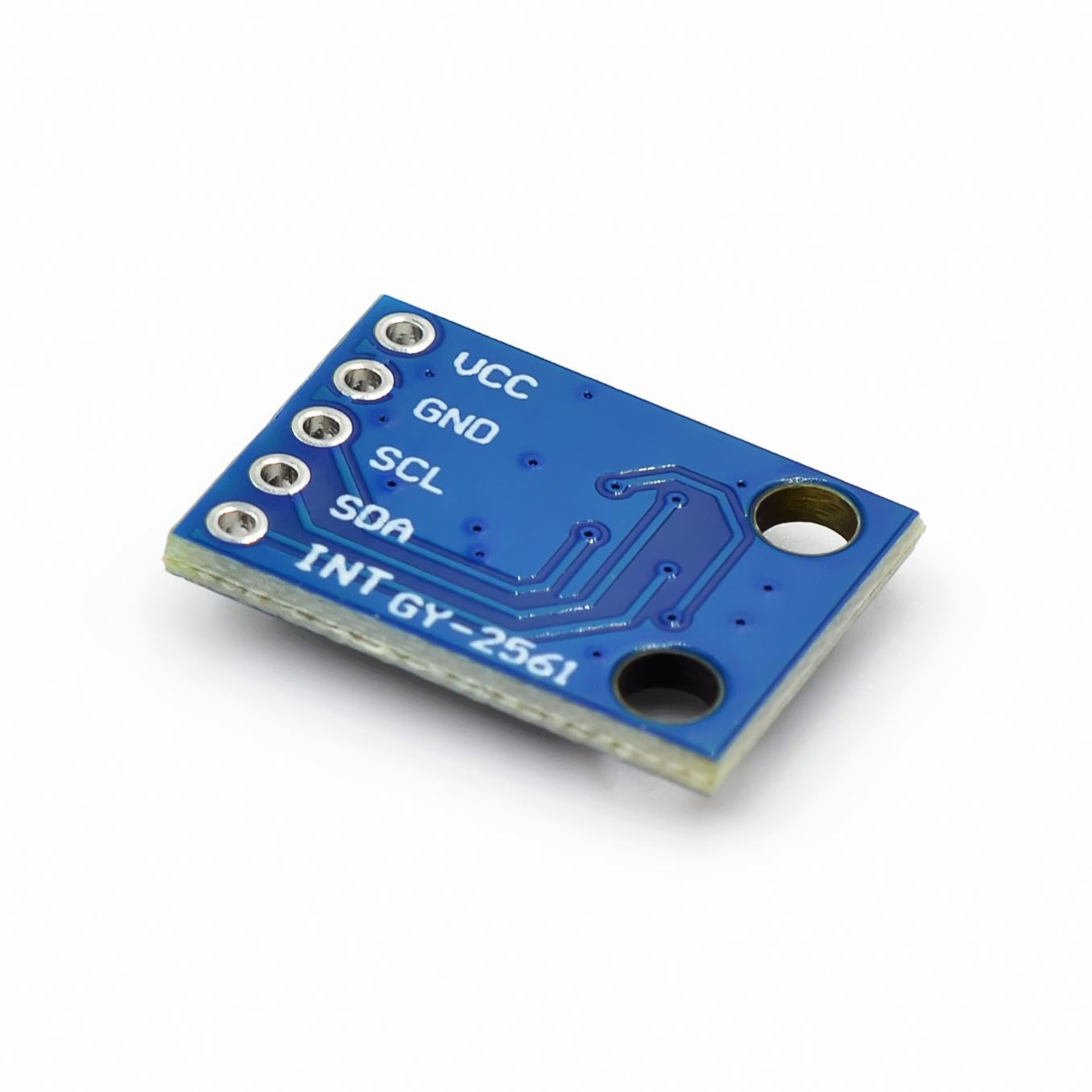
GY‑2561 TSL2561 Ambient Light Sensor Module – High‑Precision Luminosity Detection Board for IoT & Industrial Applications
GY‑2561 TSL2561 Ambient Light Sensor Module – High‑Precision Luminosity Detection Board for IoT & Industrial Applications
Couldn't load pickup availability
Product Description
The GY‑2561 TSL2561 Ambient Light Sensor Module integrates a TSL2561 digital luminosity sensor on a compact breakout board, giving you direct lux readings instead of raw analog values. It features dual photodiodes (full‑spectrum and infrared) and an internal ADC, allowing it to approximate human‑eye response and maintain accuracy across a wide range of lighting conditions—from dim indoor light to bright sunlight.
With a standard I²C interface, programmable gain, and integration times, this module fits naturally into IoT and industrial systems that need precise and repeatable light measurements. It is well suited for smart‑lighting controls, energy‑efficient building automation, and environmental monitoring devices that log or react to changes in ambient illumination.
Ideal Uses
- Smart‑lighting and industrial lighting control, turning fixtures up or down based on measured lux levels.
- Display and signage dimming for kiosks, HMIs, and industrial panels that must remain readable without wasting power.
- IoT environmental monitoring nodes that report ambient light as part of building or agricultural telemetry.
- Industrial and laboratory data logging where repeatable, digital light measurements are needed over time.
- Educational and R&D projects involving photometry, lux measurement, and I²C sensor integration.
Compatibility
Interfaces via I²C (SDA/SCL), compatible with Arduino, ESP32/ESP8266, STM32, Raspberry Pi, and most other microcontrollers and SBCs.
Typically supports 3.3 V logic and supply; many GY‑2561 boards include basic regulation/level adaptation so they can be used with 5 V Arduino boards (check your specific module’s markings and documentation).
Compatible with common TSL2561 software libraries that provide direct lux calculations and automatic gain/integration‑time handling.
Key Features
-
Digital ambient light sensor (TSL2561) capable of reporting lux values over a wide dynamic range.
-
Dual photodiodes (visible + IR) with on‑chip logic to approximate human eye sensitivity.
-
16‑bit ADC with selectable integration time and gain settings for low‑light and high‑light environments.
-
I²C address selection via solder pads/jumpers on many GY‑2561 boards, allowing multiple sensors on the same bus.
-
Low power consumption, with power‑down modes suitable for battery‑powered IoT devices.
-
Compact PCB with clearly labeled pins and mounting holes, easy to embed in industrial enclosures or sensor hubs.
Technical Specs (Typical, Module‑Dependent)
Exact values depend on the specific GY‑2561 board revision; the list below reflects common TSL2561‑based modules:
- Sensor IC: TSL2561 digital luminosity (ambient light) sensor.
- Interface: I²C (up to 400 kHz).
- Supply Voltage: typically 3.0–3.6 V at the sensor; many modules accept 3.3–5 V via on‑board regulation.
- Output: 16‑bit digital counts from visible + IR channels; libraries convert to lux.
- Dynamic Range: from very low light (indoor) to bright sunlight using auto gain and integration control.
- Operating Temperature: suitable for typical indoor and light industrial environments (refer to IC datasheet for exact range).
What’s Included
- 1 × GY‑2561 TSL2561 Ambient Light Sensor Module
- 1 × Pin‑header strip (often included loose for optional soldering, depending on supplier)
Safety Note
- This module is intended for low‑voltage electronics; ensure correct wiring of VCC, GND, SDA, and SCL, and do not exceed the rated supply voltage.
- For reliable lux measurements, avoid covering the sensor, and mount it where it has a clear line of sight to the ambient light you want to measure (not directly behind tinted covers unless calibrated).
- In industrial environments, protect the board from dust, moisture, and chemical contaminants; use a transparent window or enclosure if necessary and periodically clean or recalibrate if exposure conditions change.
Share