sugar
ESP32‑C6‑N16 Wi‑Fi 6 Bluetooth Zigbee Development Board (Welded Headers)
ESP32‑C6‑N16 Wi‑Fi 6 Bluetooth Zigbee Development Board (Welded Headers)
Couldn't load pickup availability
ESP32‑C6‑N16 Wi‑Fi 6 Bluetooth Zigbee Development Board (Welded Headers)
Compact ESP32‑C6‑N16 development board with 16 MB flash, Wi‑Fi 6, Bluetooth 5 LE, Zigbee and Thread support, and pre‑soldered headers, ideal for modern IoT, Matter, and smart‑home projects.
Compatibility
Works with Arduino‑style workflows (ESP32 Arduino core) and ESP‑IDF for low‑level development.
Fully compatible with ESP‑IDF examples and tooling for ESP32‑C6 (including Wi‑Fi 6, Bluetooth LE, Zigbee, and Thread demos). Usable from popular platforms such as PlatformIO, VS Code, and CLion when configured for ESP32‑C6 target boards. Logic level is 3.3 V, making it suitable for direct connection to most 3.3 V sensors and peripherals, or to 5 V systems via level shifting.
Key Features
-
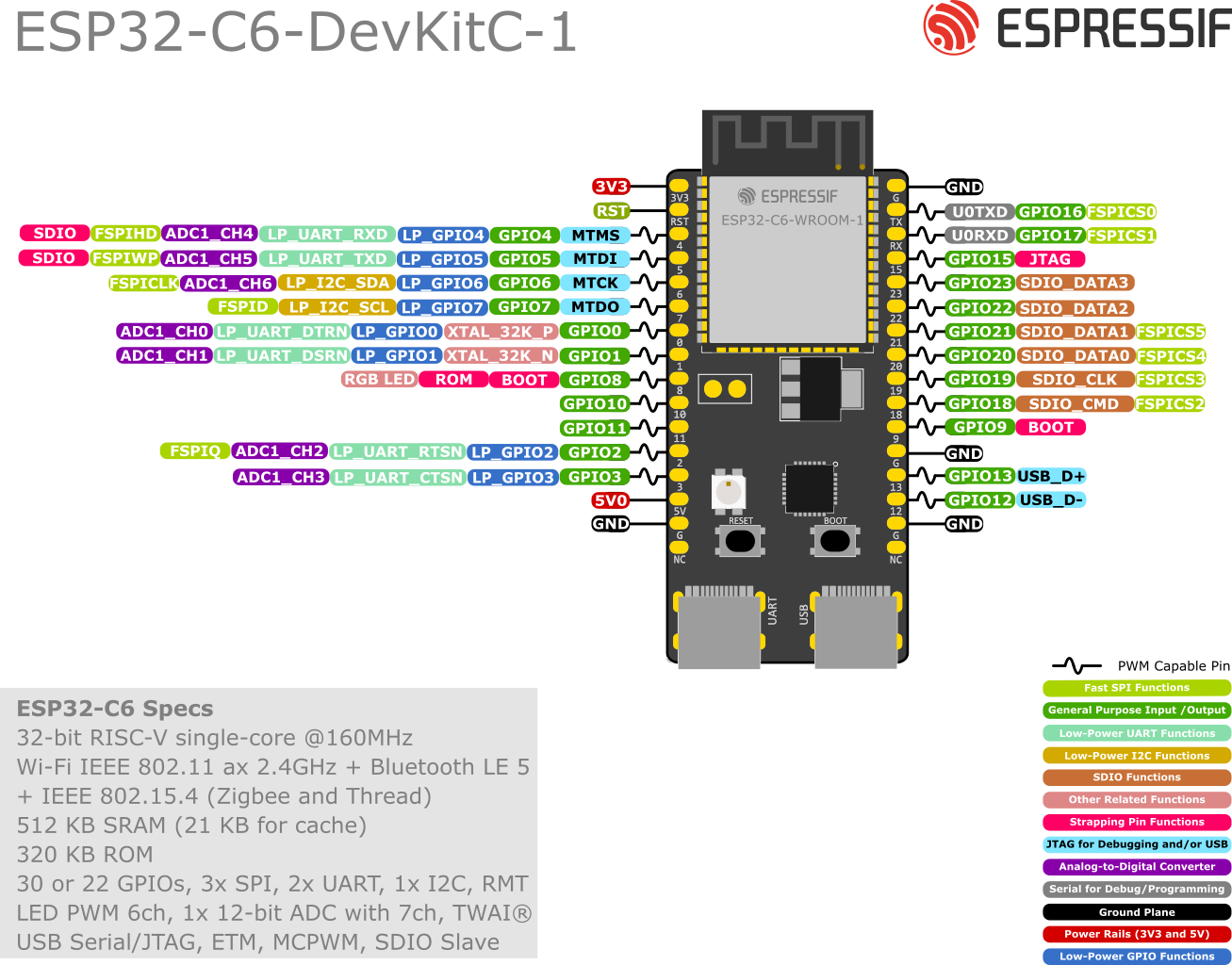
ESP32‑C6‑WROOM‑1 series module with 32‑bit RISC‑V core up to 160 MHz and low‑power coprocessor.
-
16 MB SPI flash for firmware, OTA updates, and large applications.
-
Integrated Wi‑Fi 6 (2.4 GHz, 802.11ax) with backward compatibility to 802.11b/g/n.
-
Bluetooth 5.x LE for low‑power wireless peripherals and beacon applications.
-
IEEE 802.15.4 radio supporting Zigbee 3.0 and Thread, ideal for Matter‑ready smart‑home devices.
-
Multiple interfaces broken out: GPIO, UART, I²C, SPI, ADC, PWM and more for sensors, displays, and actuators.
-
Pre‑soldered (welded) pin headers for immediate breadboard or jumper‑wire use—no soldering required.
-
Onboard USB and UART support (board‑dependent) for simple programming and debugging over a single cable.
Ideal Uses
-
Smart‑home and Matter prototypes using Wi‑Fi, Zigbee, or Thread (sensors, switches, plugs, controllers).
-
IoT gateways and edge nodes that need Wi‑Fi 6 efficiency plus low‑energy Bluetooth and 802.15.4 for multi‑protocol networks.
-
Low‑power monitoring devices such as environmental sensors, occupancy detectors, and battery‑powered nodes.
-
-
1 × ESP32‑C6‑N16 Wi‑Fi 6 Bluetooth Zigbee Development Board (ESP32‑C6 core module with 16 MB flash).
-
2 × Pre‑soldered pin‑header rows (already welded to the board; ready for breadboard or jumper‑wire use).
Educational and hobby projects exploring RISC‑V, Wi‑Fi 6, and modern wireless stacks on a compact dev board.
Technical Specifications
-
MCU: ESP32‑C6 (RISC‑V, single‑core up to 160 MHz, plus low‑power core).
-
Flash: 16 MB external SPI flash.
-
Memory: ~512 KB SRAM and 320 KB ROM (SoC internal).
-
Wireless:
-
2.4 GHz Wi‑Fi 6 (802.11ax), backward compatible with 802.11b/g/n.
-
Bluetooth 5.x LE.
-
802.15.4 for Zigbee 3.0 and Thread.
-
-
Interfaces: GPIO, UART, I²C, SPI, I²S, ADC, PWM, USB‑Serial/JTAG (board‑specific), and more.
-
Supply voltage: typically 3.3–5 V input (on‑board regulation down to 3.3 V; logic at 3.3 V).
-
Antenna: Integrated 2.4 GHz PCB antenna on the module.
-
Form factor: Nano‑style compact board with dual header rows; ESP32‑C6‑N16 (Welding) variant includes pre‑soldered headers.
What’s Included
-
Safety Note
Use only within the specified voltage range and respect the 3.3 V logic level to avoid damaging the module or your peripherals. When experimenting with Wi‑Fi, Bluetooth, Zigbee, or Thread, follow local RF regulations and avoid enclosing the antenna in metal housings that can degrade signal quality. Always double‑check wiring before powering external sensors, motors, or relays from the board’s pins to prevent shorts or excessive current draw.
-
Share