sugar
4-Channel 5V Relay Module
4-Channel 5V Relay Module
Couldn't load pickup availability
4‑Channel 5V Relay Module
Multi‑Channel AC/DC Switching for Arduino, ESP32 & Raspberry Pi
Versatile 4‑channel 5V relay module for safely switching multiple AC or DC loads using low‑voltage control signals. Ideal for home automation, smart‑home hubs, robotics, and industrial control prototypes.
4‑Channel 5V Relay Module Compatibility
Works with Arduino, ESP32, ESP8266, Raspberry Pi, STM32, and most 3.3V–5V microcontroller platforms (via logic‑level trigger pins and common ground).
Key Features
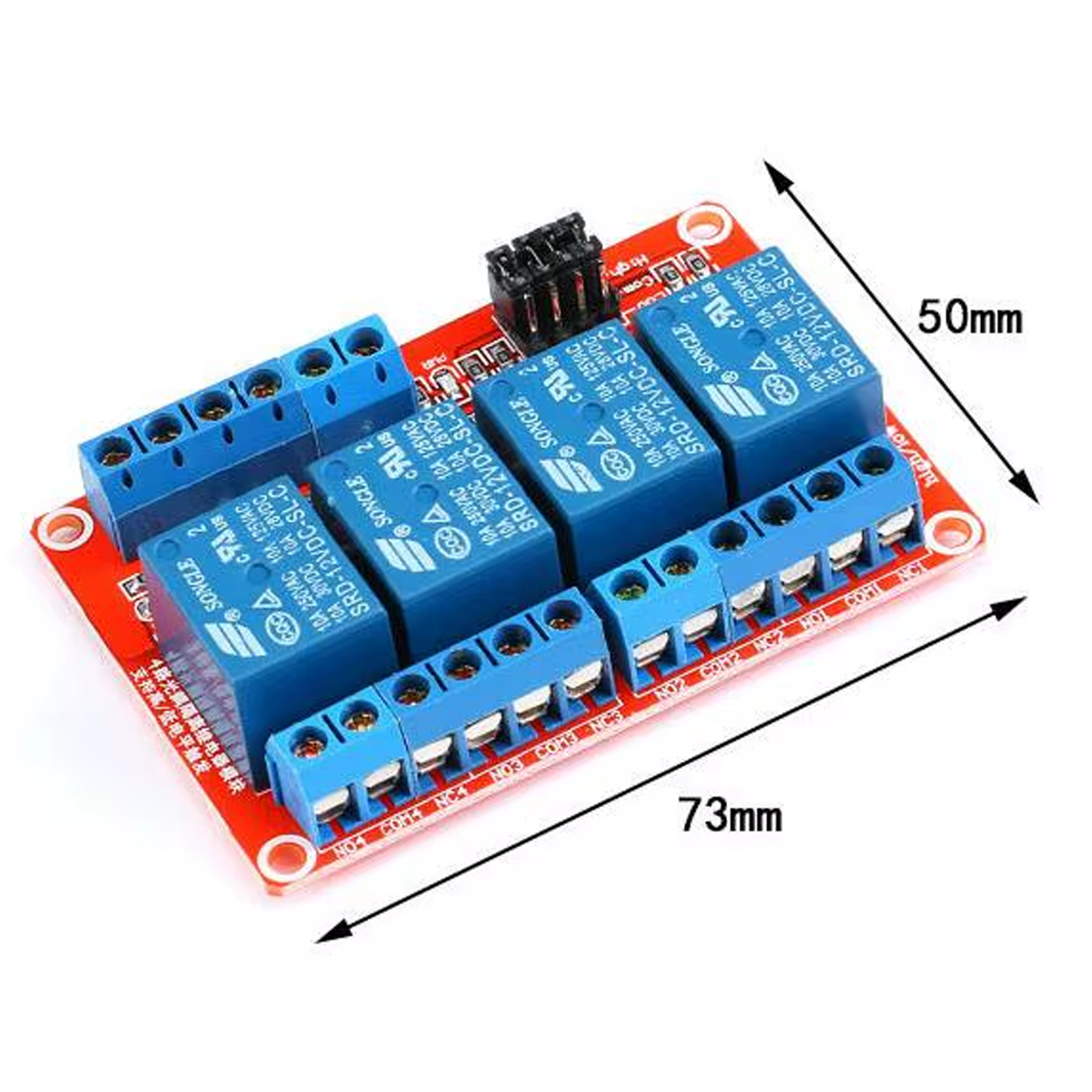
4 independent relay channels for controlling multiple loads from a single board.
5V relay coils, compatible with common microcontrollers (Arduino, ESP32, Raspberry Pi, etc.).
Optocoupler‑isolated inputs (on most variants) for better noise immunity and protection.
Individual status LEDs per channel to show relay state at a glance.
Screw terminals for secure high‑voltage/load wiring and pin headers for easy signal input.
Shared VCC/GND bus makes wiring neat and straightforward in control panels and enclosures.
Technical Specs
Operating voltage: 5V DC (relay coils).
Trigger voltage: typically 3.3–5V logic‑level compatible (depends on board design).
Relay contact rating (per channel): commonly up to 10A at 250V AC or 30V DC (confirm with actual relay markings).
Channel count: 4 independent SPDT relays.
Input interface: IN1–IN4 signal pins plus VCC and GND.
Indicators: power LED and 4 channel status LEDs.
Ideal Uses
Home automation: independently control lights, fans, and appliances in different rooms or zones.
Smart‑home projects: integrate with ESP32/ESP8266 for Wi‑Fi control of multiple relays.
Robotics & mechatronics: drive pumps, solenoids, and motors with an external supply.
Lab test rigs and industrial prototypes that need multiple switched outputs.
What’s Included
1 × 4‑Channel 5V Relay Module.
Safety Note
This module can switch mains AC voltage. Always use proper insulation, strain relief, and enclosures. Follow local electrical codes, and consult a qualified electrician if you’re not experienced working with mains power.
Share